
If heat could ‘freeze’ things in place, it did this day at Joggins.
If heat could ‘freeze’ things in place, it did this day at Joggins.
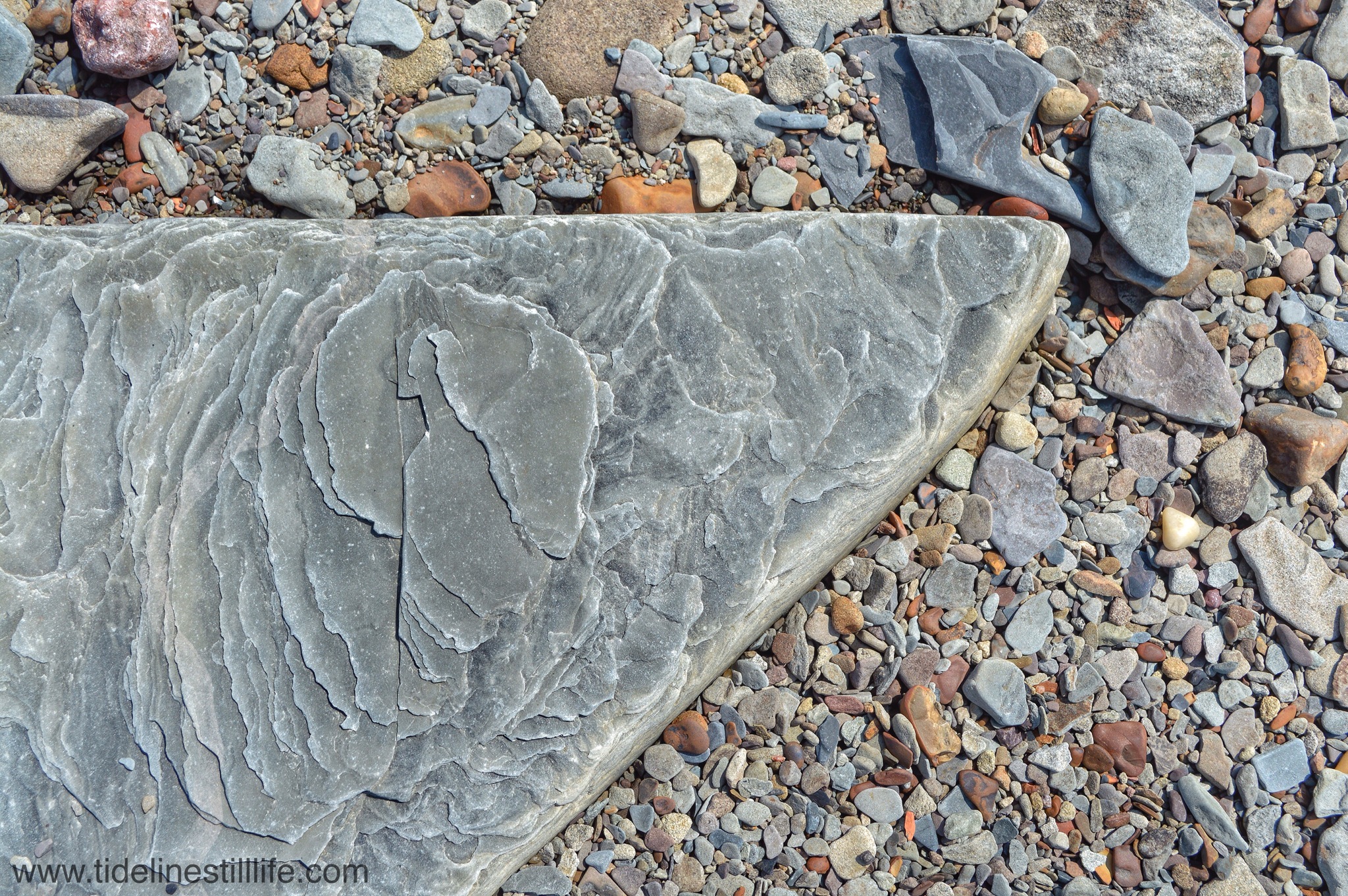
It is a different sort of tide line that presents itself at Joggins Fossil Cliffs, and other pebble beaches. Where I usually look for compositions that prominently include marine life (plant and/or animal) on a sand background, pebble beaches do not offer this sort of tableau. Instead, a pebble-beach tide line is a puzzle of shapes and textures that almost require a refocusing of one’s eye and thoughts before focusing a camera lens.
Joggins is an evolving, shifting beach because of the constant erosion of the cliffs, coupled with dramatic high tides. The result is a beach (and tideline) that is littered with new-fallen shale, as well as with stones and pebbles that are well eroded. New fossils are revealed with every new cliff-fall, and can easily be found in many of the eroded stones.
This still life does not have any fossils that I can see, but the textures and colors in the shale and stones create a pleasing and somewhat dynamic photograph. I notice new things about it every time I look at it.

… or the impression of intaglio.

Tumbled into softness, a twig and a brick create an eroded still life.
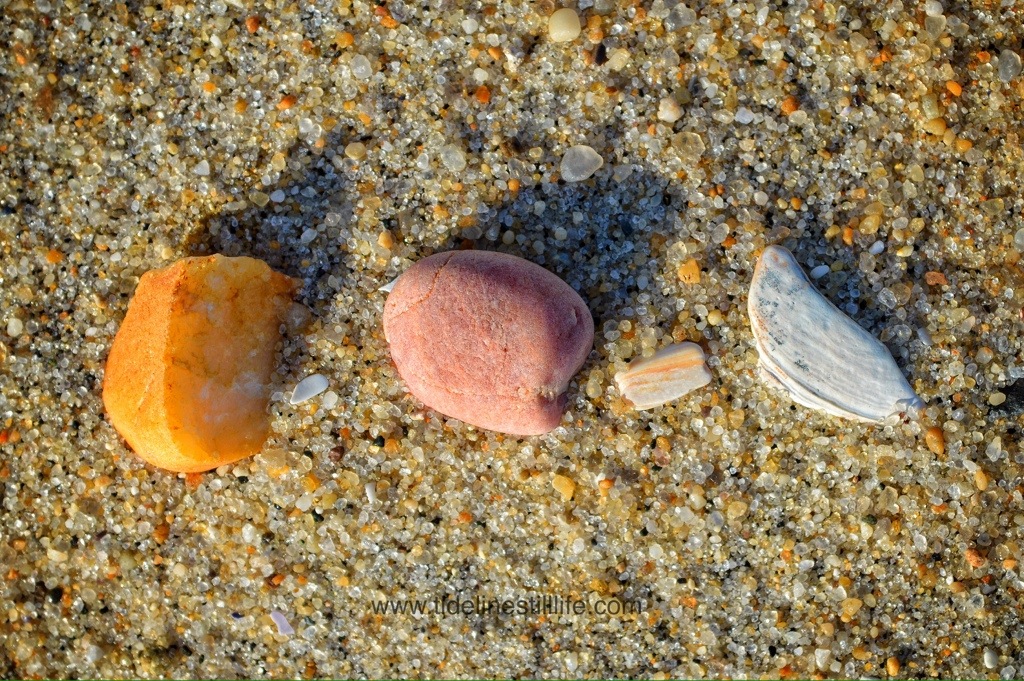
Pink is dominant, but it is the luminous quality of the yellow rock in the sun that is most striking.

In a college geology class, decades ago, we learned that green stones along the NJ shore line were likely volcanic – evidence and remains of the volcanoes that are now the Appalachian range. This stone is nearly as light as the shells that surrounded it, likely volcanic tuff.
Regardless of its composition or origin, though, it creates a serene still life here with the very blue mussel and the tide’s high line.

Spin art (again), golden pebble, and mollusk air hole. Alignment. Serenity.

This time of year the pebbles begin to arrive on the beach. I have no idea why there are not more of them on the tide line in the summer. Anyway, I am intrigued by their beauty, the juxtaposition of … Continue reading


Just emerging from the retreating tide, these two stones give the appearance of fiercely clawing their way to the surface on the tide line.
 Tide Line Still Life