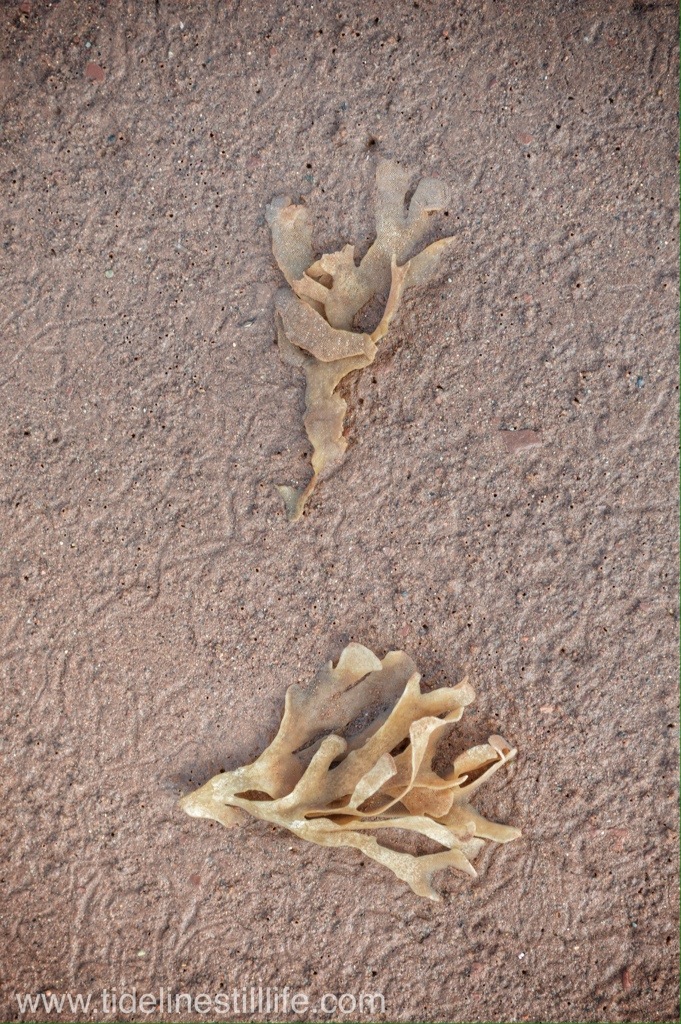
A graceful duet, danced in the Minas Basin mud.

A graceful duet, danced in the Minas Basin mud.

The tremendous tidal change in the Bay of Fundy leaves marine creatures exposed during low tide.
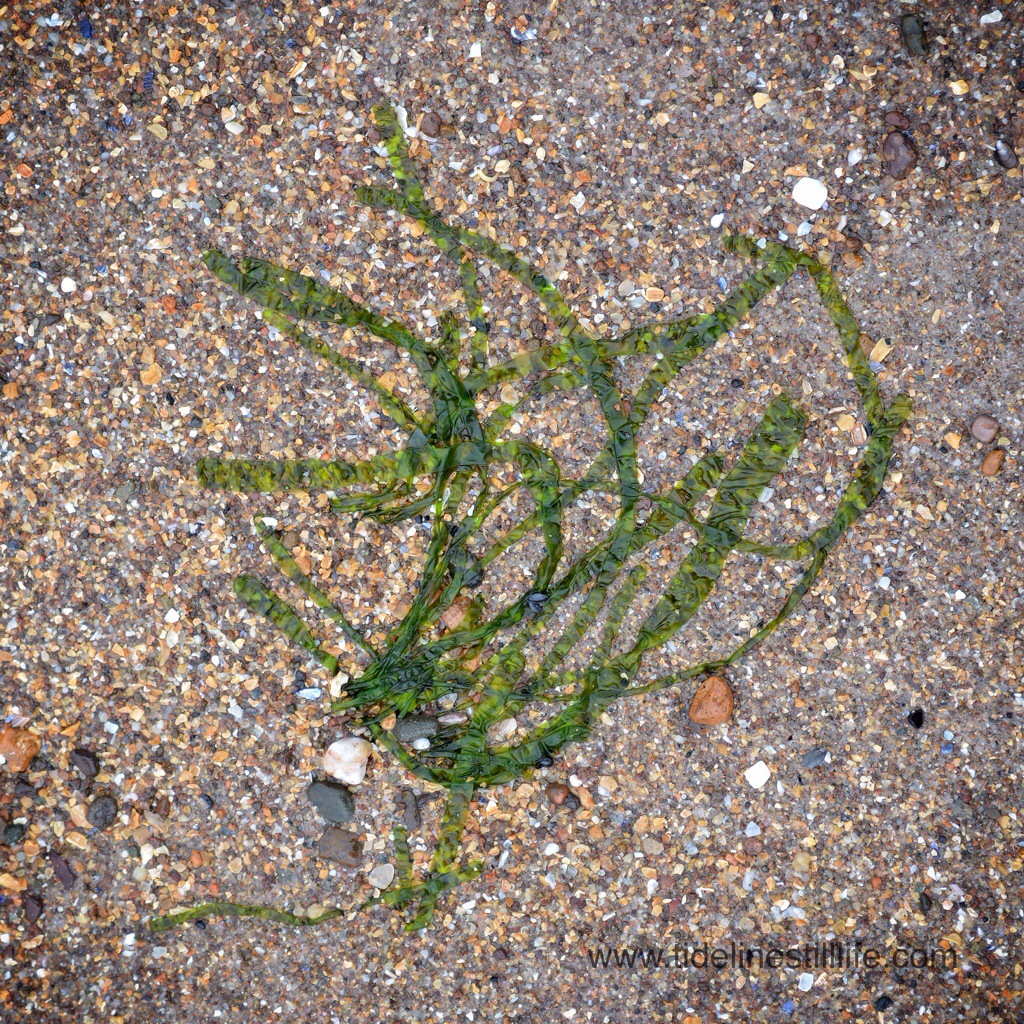
Nature emulates 20th century art.

An anniversary trip to Nova Scotia provided us with a number of new tide lines to visit and to photograph. The first stop was the Bay of Fundy, which experiences one of the highest vertical tidal ranges in the world. The Minas Basin, pictured here, is where the tide is most extreme. Last weekend the tidal extreme was approximately 40′ (over 12 meters).
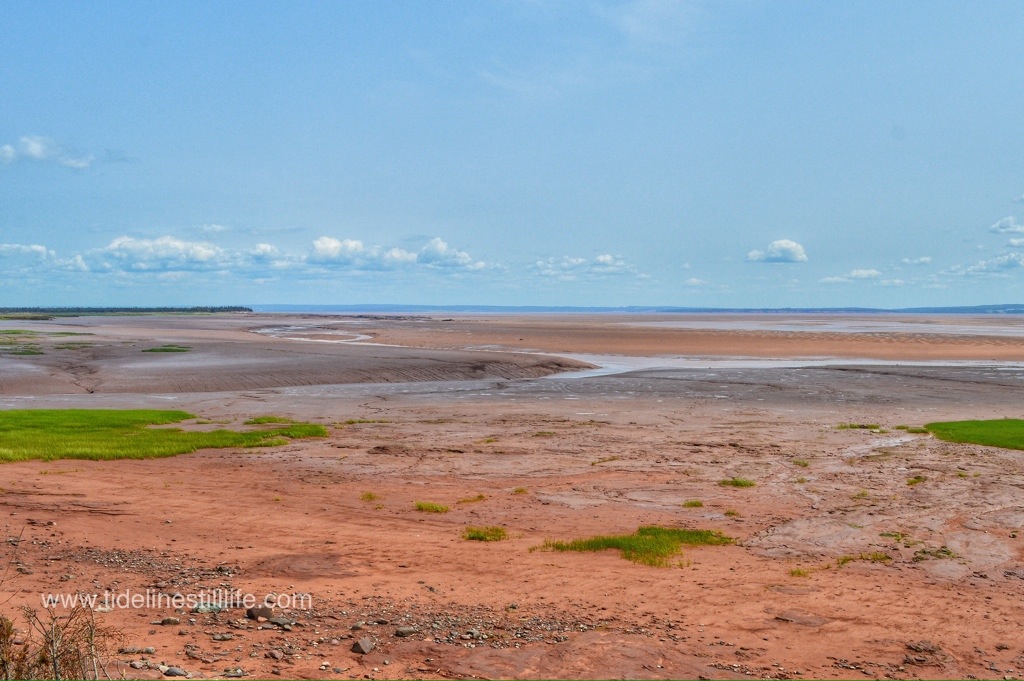
Low tide reveals huge expanses of thick, oozy, sticky, red mud; mud that is delightful to walk in, roll in, and play in, as many children demonstrated for us.
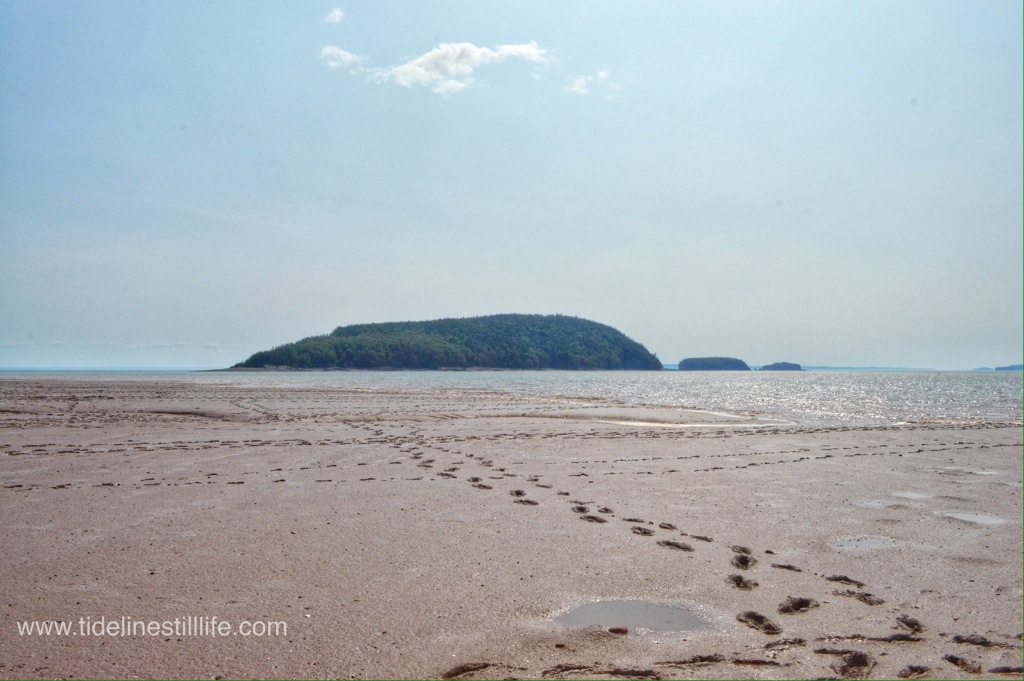
With the permission of their parents, I photographed these two delightful mud-monsters at Five Islands Provincial Park. I think a visit to the Minas Basin is a much different experience when accompanied by children! Although far from a “still life”, these brothers were very much part of the tide line … and I think the tide line was very much a part of them, likely for a few days after. This mud does not just rinse off!


And the wind had a part in this composition …


Simplicity to close out the work week.
Heading out to explore a few new tide lines tomorrow as an anniversary gift from my husband (Nova Scotia: the Bay of Fundy and on Cape Breton Island). I may miss a day or two posting. Enjoy your weekend!

And sometimes there is no underlying order, just interest.

Those of you who have followed me for a while know that the objects in my photos are not rearranged or repositioned; I photograph the objects exactly as they are found. My still lifes have been created by the ebb and flow of the sea, the wind, the blowing sand, and natural variations in light. I simply capture what has already been arranged before it changes or disappears
With a major in art history under my belt, there is a strong tendency on my part to return to the foundations of what creates a solid composition; a composition that draws in the viewer, and which is a catalyst for extended engagement with the piece. Inspired by a Sarah Vercoe’s guest post on Leanne Cole’s photography blog (July 15, 2014) http://leannecolephotography.com/2014/07/15/up-for-discussion-the-golden-ratio/, I decided to go through some of my past photos to see where the Golden Ratio and the Phi Grid may be supporting the structure of my own pieces, or where these principles in nature may have drawn both my eye and my camera.
I have a life-long appreciation and love for the beauty and balance of form that is found in traditional still life painting, which often has one or both of these principles as a foundation for composition. However, the Golden Ration and Phi Grid, while found in nature, are not created randomly. It is highly unlikely that the pull of the tide and the west wind could create a Fibonacci spiral. I was interested in discovering if my attraction is to naturally occurring still lifes that utilize either of these underlying compositional elements in their arrangement, or in the objects that these compositions may contain. I found that sometimes this is the case. I plan to keep sorting through photos as part of this little bit of self-discovery.
Meanwhile, here is today’s photo, “Pebble, Operculum, and a Sprinkle of White Sand”, taken this spring in Sandy Hook, NJ. Even though I did not recognize his genius until I took this second look, I believe Fibonacci would be pleased with this capture.
 Tide Line Still Life