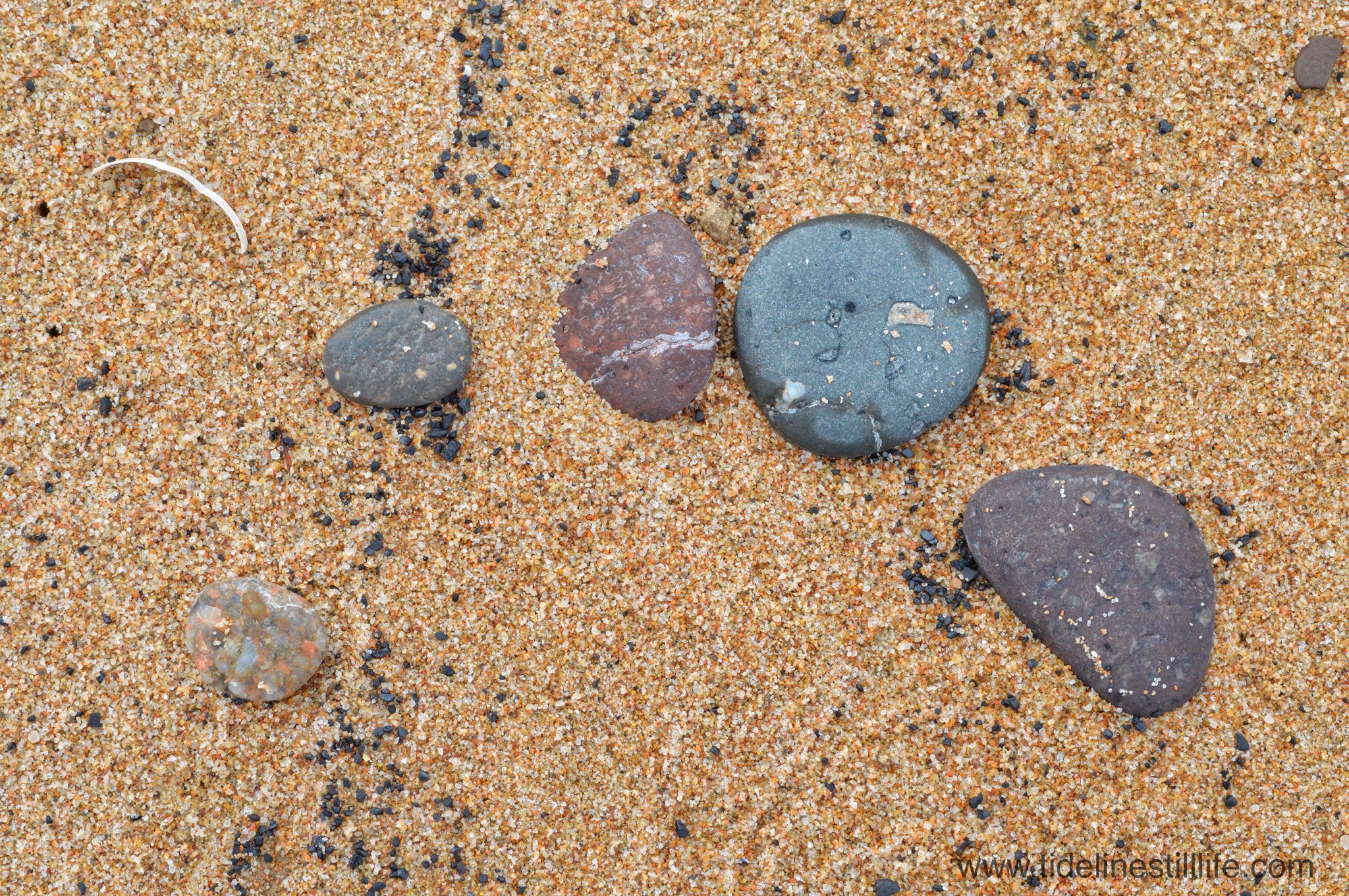
The bottom left pebble is absolutely enchanting; all those colors are packed into a small, flat stone less than an inch in diameter. Magical!

The bottom left pebble is absolutely enchanting; all those colors are packed into a small, flat stone less than an inch in diameter. Magical!

If heat could ‘freeze’ things in place, it did this day at Joggins.
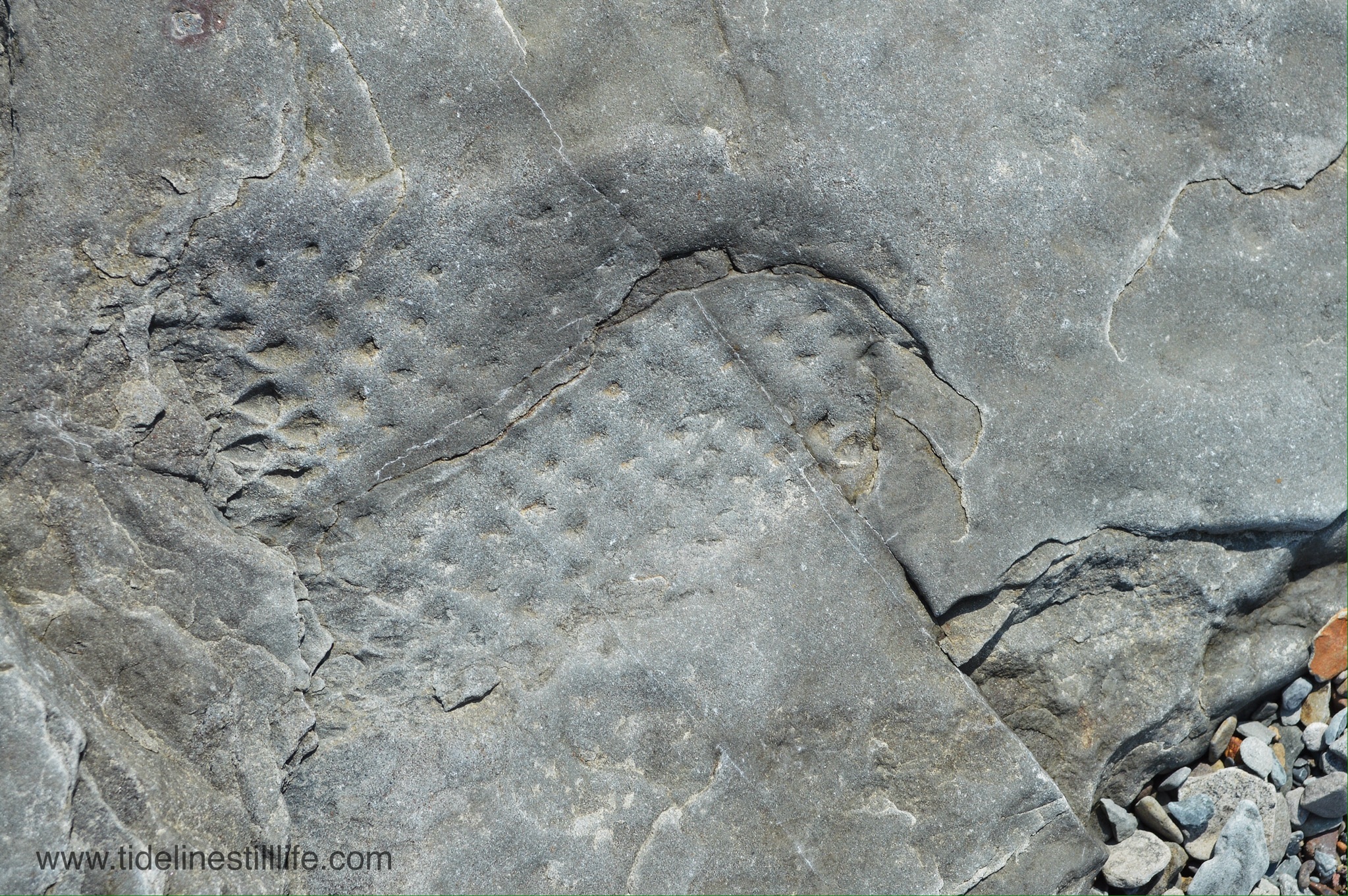
… and Nova Scotia, and tide lines of all sorts, and most especially days spent exploring nature with my beloved. This fossilized impression of stigmaria bark from the Carboniferous period says it all.
This photograph was taken along the tide line at Joggins Fossil Cliffs. Rather than a sand, or even small pebble tide line, Joggins is mostly a jumble of rocks, with sand and smaller rocks emerging at low tide. It makes walking the tide line a bit of a challenge, but the reward of watching one’s step comes with finding innumerable fossils along the walk.
NOTE: fossil was misidentified yesterday as lepidodendron. Corrected today as stigmaria.

Partridge Island
Nova Scotia
Martinique Beach Provincial Park, Nova Scotia
Martinique Beach is a 5 kilometer expanse of lovely sand beach, surrounded by areas of protected dunes. It sits at the end of a seemingly endless 12 kilometer road, but is very much worth the drive. The dunes are protected, with 8 access points much like the one below. We arrived early on a misty morning; the air was cooler than the water (warmer than ours at the Jersey shore because of its closer proximity to the Gulf Stream), so the beach was full of mist, and the light was luminous. Absolutely magic. There were still lifes aplenty, which I will be sharing over the upcoming weeks.
I will return there, hopefully!


Joggins Fossil Cliffs, Nova Scotia
A magnificent pebbled beach and cliffs positively littered with fossils. No fossil here (unless that is a small bit of coprolite from a fish in the red rock), but a lovely composition that was arranged by the outgoing tide.

Those of you who have followed me for a while know that the objects in my photos are not rearranged or repositioned; I photograph the objects exactly as they are found. My still lifes have been created by the ebb and flow of the sea, the wind, the blowing sand, and natural variations in light. I simply capture what has already been arranged before it changes or disappears
With a major in art history under my belt, there is a strong tendency on my part to return to the foundations of what creates a solid composition; a composition that draws in the viewer, and which is a catalyst for extended engagement with the piece. Inspired by a Sarah Vercoe’s guest post on Leanne Cole’s photography blog (July 15, 2014) http://leannecolephotography.com/2014/07/15/up-for-discussion-the-golden-ratio/, I decided to go through some of my past photos to see where the Golden Ratio and the Phi Grid may be supporting the structure of my own pieces, or where these principles in nature may have drawn both my eye and my camera.
I have a life-long appreciation and love for the beauty and balance of form that is found in traditional still life painting, which often has one or both of these principles as a foundation for composition. However, the Golden Ration and Phi Grid, while found in nature, are not created randomly. It is highly unlikely that the pull of the tide and the west wind could create a Fibonacci spiral. I was interested in discovering if my attraction is to naturally occurring still lifes that utilize either of these underlying compositional elements in their arrangement, or in the objects that these compositions may contain. I found that sometimes this is the case. I plan to keep sorting through photos as part of this little bit of self-discovery.
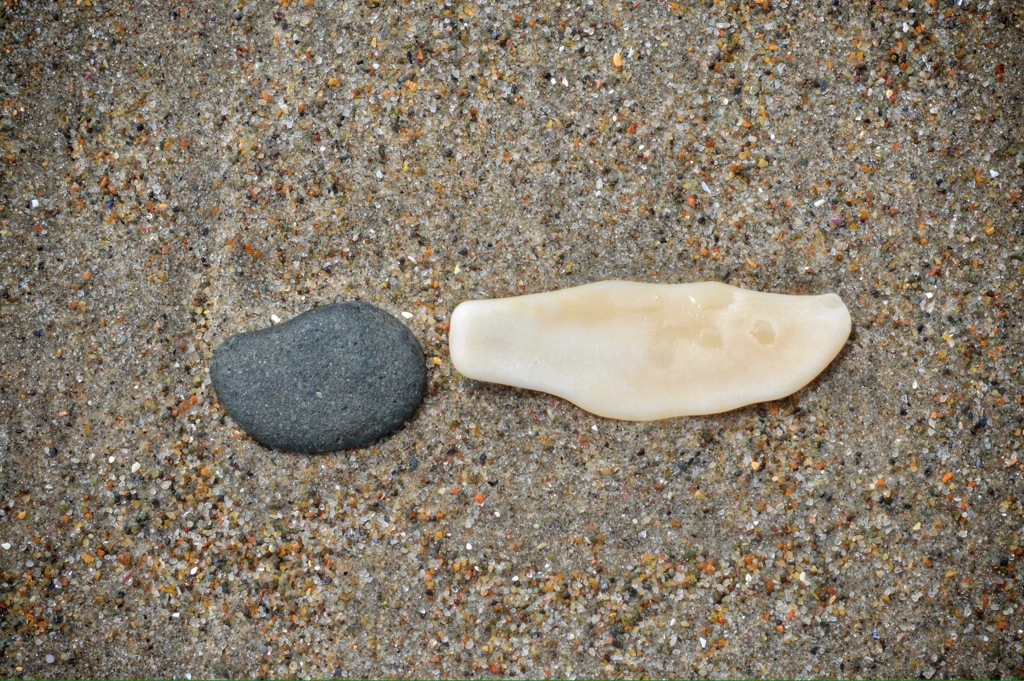
Meanwhile, here is today’s photo, “Pebble, Operculum, and a Sprinkle of White Sand”, taken this spring in Sandy Hook, NJ. Even though I did not recognize his genius until I took this second look, I believe Fibonacci would be pleased with this capture.


The colors on Spittal’s beach are plenty, but soft and gentle like a tweed fabric. When one looks carefully all the colors of the rainbow are able to be found. Here, the sea’s shell and a well-worn pebble are each quite blue. It almost seems as if they have sought one another out in the sand.
 Tide Line Still Life